Last updated: April 1, 2026
DESTINATION GUIDE
Malaysia After Dubai — Southeast Asian Hub for Dubai Expats 2026
Malaysia combines modern infrastructure, multicultural society, and strategic location. Here is what Dubai expats need to know about making Malaysia their next chapter.
Why Malaysia Attracts Dubai Expats
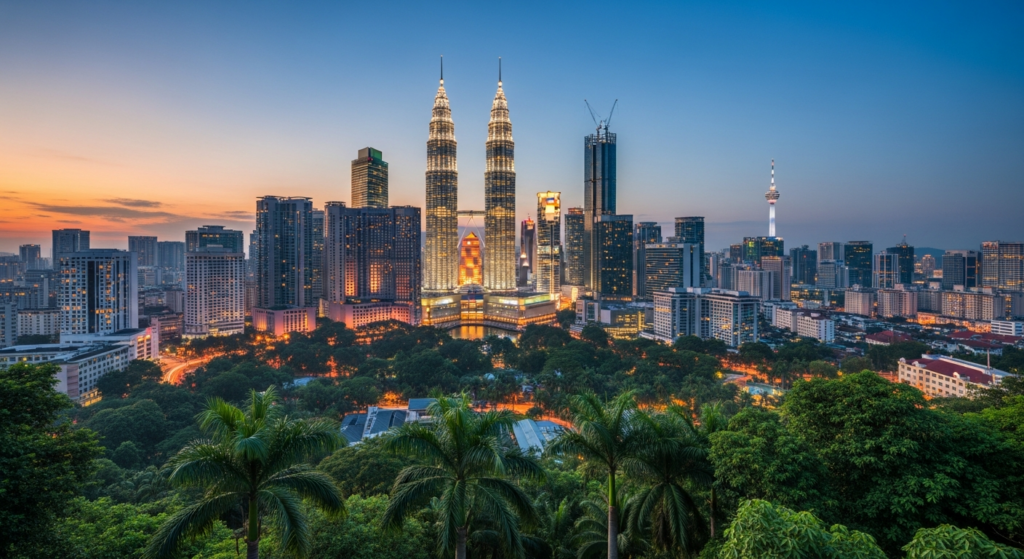
Malaysia offers a unique value proposition in Southeast Asia: modern infrastructure rivaling Singapore at a fraction of the cost. Kuala Lumpur’s skyline feels familiar to Dubai expats — gleaming towers, world-class shopping malls, and efficient public transport. The cost of living runs 40-50% below Dubai, and the Malaysia My Second Home (MM2H) program provides one of the region’s most structured long-term residency pathways.
For Muslim Dubai expats, Malaysia is the most culturally comfortable Southeast Asian option. Halal food is ubiquitous, mosques are everywhere, and Islamic banking is fully integrated into the financial system. The country’s multicultural society — Malay, Chinese, Indian, and international communities — creates a tolerant, diverse environment. English is widely spoken in business and educated circles. International schools in KL are excellent, with fees ranging from $5,000-20,000 per year.
Healthcare is strong — KL’s private hospitals including Gleneagles, Pantai, and Prince Court serve medical tourists from across Asia. The cost of medical procedures averages 50-65% below Dubai prices. Malaysia also offers excellent regional connectivity with direct flights to virtually every Asian capital, Dubai, London, and Australia. For those who want to stay connected to the Middle Eastern business world, Malaysia’s timezone and flight routes are advantageous.
Malaysia vs Bali: The Dubai Expat Comparison
Malaysia wins for: Muslim expats wanting halal infrastructure, families wanting established international schools in a major city, anyone needing frequent flights to Dubai or Asia, and those preferring urban over tropical island living. KL’s modern infrastructure — efficient metro, Grab ride-hailing, modern condominiums — provides the smoothest transition from Dubai’s urban lifestyle.
Bali wins for: cost savings (Bali is 10-15% cheaper for equivalent family lifestyle), property investment returns (Bali 10-18% vs Malaysia 4-6%), lifestyle quality (villa living vs apartment living), and geopolitical neutrality. Indonesia’s formal neutrality stance contrasts with Malaysia’s closer ties to the Muslim world and potential diplomatic complications. For villa seekers, nature lovers, and those wanting a fundamentally different pace from city life, Bali is the stronger choice.
The MM2H program requires a fixed deposit of RM 1-5 million (approximately $220,000-$1.1 million) depending on age and category, making it one of the more expensive residency programs in the region. Indonesia’s Second Home Visa requires $130,000 — considerably less. For investment-oriented expats, Bali’s property yields and lower residency costs make Indonesia the more capital-efficient option.
Frequently Asked Questions
Is Malaysia cheaper than Bali for Dubai expats?
Malaysia is 40-50% cheaper than Dubai; Bali is 55-64% cheaper. KL apartment living costs approximately $2,500-5,000/month for a family; Bali villa living runs $3,000-6,000/month. The lifestyles are fundamentally different — urban modern in KL versus tropical villa in Bali. For equivalent luxury, Bali typically costs 10-15% less.
What is the MM2H visa program?
Malaysia My Second Home requires a fixed deposit of RM 1-5 million in a Malaysian bank, proof of offshore income, and health insurance. It provides 5-year renewable residency. The program was reformed in 2021 with significantly higher financial requirements than before, making it one of the most expensive residency programs in Southeast Asia.
Is Malaysia safe during the Iran-UAE conflict?
Malaysia faces no direct threat from the conflict. However, Malaysia’s diplomatic position as a Muslim-majority nation with strong ties to the Middle East creates a different geopolitical profile than neutral Indonesia. Both countries are safe from a practical standpoint. Indonesia’s formal neutrality declaration provides the strongest diplomatic de-targeting in the region.
How does Malaysia’s healthcare compare to Bali?
KL has superior hospital infrastructure with internationally accredited facilities like Gleneagles and Prince Court. Bali’s BIMC Hospital (Australian-managed) and Siloam Hospital are excellent but KL hospitals are more comprehensive. However, Bali offers Singapore medevac as a backup at just 2.5 hours by air.
Should I choose Malaysia or Bali after Dubai?
Choose Malaysia for urban lifestyle, halal infrastructure, frequent Dubai flights, and world-class city hospitals. Choose Bali for tropical villa living, higher property returns, stronger cost savings, formal neutrality, and a fundamentally different lifestyle from Dubai’s urban environment. Many expats explore both before deciding.
Is Malaysia MM2H visa still available for Dubai expats?
Malaysia My Second Home program has been restructured with updated financial requirements. The DE Rantau digital nomad visa provides an alternative pathway for remote workers, requiring proof of employment with a foreign company and minimum annual income of USD 24,000. Both pathways offer Dubai expats legal residence with access to Malaysia excellent healthcare system, international schools, and modern infrastructure.
Living in Malaysia: The Dubai Expat Experience
Kuala Lumpur provides perhaps the smoothest transition from Dubai of any destination on this list. The city’s skyline, shopping malls, and urban infrastructure feel instantly familiar. Mont Kiara and Bangsar are KL’s premier expat neighborhoods — modern condominiums with pools, gyms, and 24-hour security mirror the Dubai lifestyle at 40-50% lower cost. A 3-bedroom condo in Mont Kiara rents for $1,500-2,500 per month, including facilities that would cost $4,000-7,000 in Dubai Marina.
Malaysian food is arguably Southeast Asia’s best — a rich fusion of Malay, Chinese, Indian, and international cuisines available from street stalls ($2-3 per meal) to fine dining ($30-60 per person). For Muslim families, the comprehensive halal food infrastructure provides peace of mind that no other destination in this guide can match. Groceries including imported Western products are available at major supermarkets like Village Grocer and Cold Storage at prices 30-40% below Dubai equivalents.
International schools in KL are world-class. Alice Smith School (British), Garden International School, and International School of Kuala Lumpur (ISKL) offer IB, British, and American curricula with fees from $5,000-20,000 per year. The range and quality rival Bangkok and exceed Bali’s options for families wanting traditional structured education. Malaysian universities including Monash, Nottingham, and Xiamen University campuses also offer affordable tertiary education pathways for expat teenagers.
Penang deserves special mention as an alternative to KL. This island city combines heritage architecture, legendary food culture, a growing tech scene, and beach living at 20-30% below KL prices. George Town’s UNESCO heritage zone offers character that no modern Asian city can replicate. For Dubai expats who want the best of island and city living without the premium of Bali’s villa market, Penang provides a compelling middle ground.
Explore Malaysia or Bali?
Talk to our relocation team for honest, no-pressure guidance.