Last updated: April 1, 2026
Destination Comparison
Best Countries to Move to After Dubai
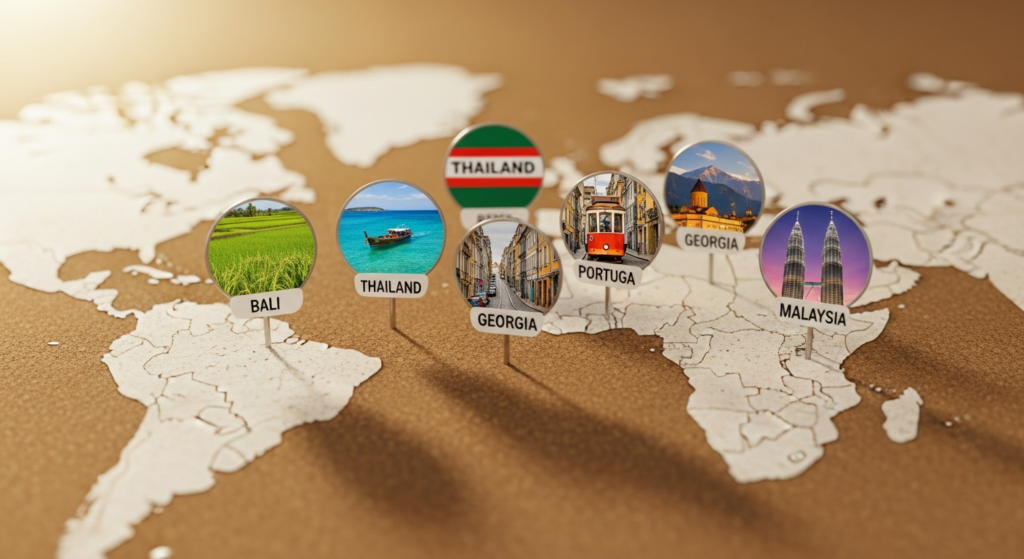
Bali, Thailand, Portugal, Georgia, Malaysia — a comprehensive comparison of the top destinations for Dubai expats seeking their next chapter.
Life After Dubai: Choosing Your Next Destination
The decision to leave Dubai is rarely impulsive. It develops gradually — through conversations with fellow expats who have already moved, through late-night calculations comparing savings rates to rising costs, through that moment when you realise your children have spent more of their lives in air-conditioned malls than in nature. When the decision crystallises, the next question is immediate: where do we go?
For most Dubai expats, returning to their home country is not the preferred option. You have outgrown the life you left behind. You want international community, warm weather, lower costs, and the freedom that expat life provides. The question is which destination offers the best combination of these elements for your specific circumstances — your family size, your budget, your work situation, and your lifestyle priorities.
After Dubai has helped hundreds of professionals navigate this decision. Here is our honest assessment of the five leading destinations for Dubai expats, based on real relocation outcomes and client feedback.
Bali, Indonesia — The Top Choice
Bali consistently ranks as the number one destination for Dubai expats who want to maintain an international lifestyle at dramatically lower costs. The island offers tropical luxury living at 50-65% below Dubai prices, a thriving expatriate community of over 30,000 internationals, world-class dining and wellness facilities, excellent international schools, and a cultural richness that nourishes the soul after years of Dubai’s materialistic pace.
Monthly living costs for a family in Bali range from $3,000-$6,000 for a premium lifestyle including villa, school, dining, and activities. Visa options include the B211A, KITAS, Digital Nomad Visa, and investor visa. The timezone works well for remote workers serving European and Asian clients. The drawbacks are limited healthcare for complex conditions (Singapore is the evacuation hub) and the adaptation required for Indonesian bureaucracy.
Thailand — Infrastructure and Affordability
Thailand attracts Dubai expats who prioritise modern infrastructure, excellent healthcare, and affordability. Bangkok offers metropolitan sophistication with world-class hospitals, international schools, and a massive expat community. Chiang Mai provides mountain living at incredibly low costs. Phuket and Koh Samui deliver beach lifestyle with tourist infrastructure.
Monthly costs range from $2,500-$5,000 for a comfortable family lifestyle. Thailand’s healthcare system is exceptional — Bumrungrad International in Bangkok is world-renowned. The Long-Term Resident visa provides a clear path for professionals and retirees. The downsides include Thailand’s complex property ownership laws for foreigners and the language barrier outside tourist areas.
Portugal — European Quality of Life
Portugal is the European destination of choice for Dubai expats. The climate is warm without Dubai’s extremes, the cost of living is 30-40% below Northern Europe, and the quality of life consistently ranks among the world’s best. Lisbon and Porto offer cosmopolitan city living, while the Algarve provides coastal serenity.
Monthly costs range from $3,500-$7,000 for families. The D7 passive income visa, Digital Nomad Visa, and Golden Visa provide multiple residency pathways. Portugal offers EU access, excellent healthcare, and strong international schools. The NHR tax regime provides favourable tax treatment for new residents. Drawbacks include higher costs than Asian destinations and slower bureaucratic processes.
Georgia and Malaysia — The Dark Horses
Georgia is the emerging favourite for digital nomads and freelancers leaving Dubai. Tbilisi offers European charm, incredibly low living costs ($1,500-$3,000 monthly for a family), a flat 1% tax rate for freelancers, visa-free stays of up to one year for most nationalities, and a welcoming culture. The downside is limited international school options and harsh winters.
Malaysia provides the most familiar environment for many Dubai expats. English is widely spoken, the infrastructure is modern, healthcare is excellent and affordable, and the Malaysia My Second Home (MM2H) programme offers structured long-term residency. Kuala Lumpur costs 40-50% less than Dubai. The drawback is a less dynamic expat social scene compared to Bali or Lisbon.
Frequently Asked Questions
Which country is cheapest to live in after Dubai?
Georgia offers the lowest cost of living at $1,500-$3,000 monthly for a comfortable family lifestyle. Bali and Thailand follow at $3,000-$5,000. Malaysia ranges from $2,500-$5,000. Portugal is the most expensive of the five at $3,500-$7,000 but remains significantly cheaper than Dubai.
Which destination has the best healthcare?
Thailand has the best healthcare infrastructure, with Bangkok’s hospitals rivalling the best in the world. Malaysia and Portugal also offer excellent medical care. Bali’s healthcare is good for routine needs with Singapore as the evacuation backup. Georgia’s healthcare system is still developing but adequate for most needs.
Can After Dubai help me choose the right destination?
Absolutely. After Dubai provides personalised destination consulting based on your family situation, budget, work requirements, lifestyle priorities, and long-term goals. We have on-the-ground experience in all five destinations and can arrange exploratory visits, connect you with established expat communities, and manage the complete relocation process to your chosen destination.
Which country is easiest to get a visa for?
Georgia offers the easiest entry with visa-free stays of up to one year for most nationalities. Thailand and Indonesia provide straightforward visa processes with multiple options. Malaysia’s MM2H programme requires financial qualifications but offers long-term security. Portugal’s visa process is the most complex but grants EU residency benefits that the Asian destinations cannot match.
How do you determine which country is the best fit for each client?
Our destination matching methodology evaluates twelve weighted criteria: monthly budget requirements, climate preference, visa accessibility based on your nationality, education needs for children, healthcare quality expectations, business environment compatibility, tax optimization potential, cultural affinity, safety index, internet infrastructure, flight connectivity to Dubai and home country, and strength of existing expat community. Each client completes our comprehensive lifestyle assessment questionnaire, which our algorithm processes against real-time data from all five destinations.
What support networks exist for newly arrived expats?
Each of our five destination countries has a thriving expat community with established support networks. In Bali, communities like Canggu Expats, Bali Expat Network, and country-specific groups for Indian, British, and Australian expats provide immediate social connections. Thailand expat forums including Thaivisa and Bangkok Expats offer practical advice. Portugal has robust expat communities in Lisbon, Porto, and the Algarve with regular meetups and networking events. We provide curated introductions to community leaders and established expats who share your background and interests, ensuring you build meaningful connections from day one rather than spending months finding your social circle.
Find Your Perfect Destination
Free destination matching consultation based on your unique needs.