Last updated: April 1, 2026
Digital Nomad Guide
Digital Nomad Guide After Dubai: Work From Paradise
Dubai’s remote workers are discovering that the world’s best digital nomad destinations offer more freedom, lower costs, and better quality of life.
From Dubai Desk to Digital Nomad Freedom
The pandemic permanently changed how Dubai’s professional class works. Thousands of Gulf-based professionals discovered they could perform their roles from anywhere with reliable internet. Yet many remain tethered to Dubai — paying $3,000-$5,000 monthly for apartments they use as home offices, commuting to co-working spaces that cost more than some countries’ average monthly rent, and spending weekends in malls because outdoor activity is impossible for half the year.
The digital nomad movement offers a radical alternative. If your work requires only a laptop and stable internet, why pay Dubai prices for the privilege? The world’s leading digital nomad destinations — Bali, Thailand, Portugal, Georgia — offer professional co-working infrastructure, fast internet, vibrant communities, and living costs that allow you to save more while working less.
After Dubai specialises in helping remote professionals transition from the structured expat life of Dubai to the location-independent freedom of digital nomadism — with the guidance to avoid common pitfalls and the support to make it sustainable.
Bali: The World’s Top Digital Nomad Hub
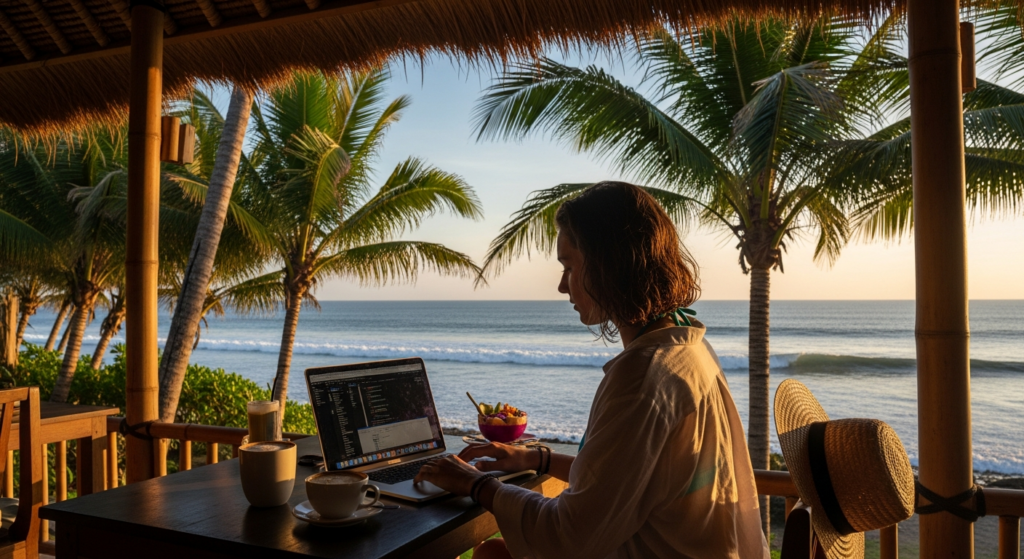
Bali consistently ranks as the world’s number one digital nomad destination, and for good reason. The island combines world-class co-working infrastructure with tropical lifestyle, affordable living, and a vibrant international community of remote workers, entrepreneurs, and creators. For Dubai professionals accustomed to premium environments, Bali’s co-working scene delivers professional quality in inspiring settings.
Co-working Spaces: Canggu alone hosts over 50 co-working spaces, from boutique creative studios to full-service business centres. Dojo Bali, Outpost, Tropical Nomad, and BWork provide high-speed internet (100+ Mbps), meeting rooms, podcast studios, event spaces, and networking events. Monthly memberships range from $150-$350 — compared to $500-$1,200 for equivalent spaces in Dubai.
Internet Infrastructure: Fibre internet is widely available in expat areas, with speeds of 50-200 Mbps. Most co-working spaces maintain redundant connections for reliability. Starlink has become a popular backup option for remote workers who need guaranteed connectivity. The infrastructure comfortably supports video calls, cloud computing, and data-intensive work.
Community: Bali’s digital nomad community is unmatched globally. Weekly meetups, skill-sharing sessions, business networking events, and social gatherings create an ecosystem where opportunities emerge organically. The NomadList community consistently rates Bali as having the world’s best nomad social scene.
Other Top Digital Nomad Destinations After Dubai
Chiang Mai, Thailand offers the lowest costs of any major digital nomad hub. Co-working from $80 monthly, studio apartments from $300, and full meals from $3. The city has excellent healthcare, a mature nomad community, and reliable infrastructure. The downside is the burning season (February-April) when air quality deteriorates significantly.
Lisbon, Portugal is Europe’s premier digital nomad city. The D7 visa and Digital Nomad Visa provide legal frameworks for remote workers. Co-working spaces are abundant, the cafe culture supports laptop workers, and the quality of life is exceptional. Costs are higher than Asia but 30-40% below London or Paris.
Tbilisi, Georgia is the budget champion for digital nomads. One-year visa-free stays for most nationalities, 1% tax rate for freelancers, apartments from $400 monthly, and an emerging co-working scene make Georgia extraordinarily attractive for cost-conscious remote workers building online businesses.
Digital Nomad Visas and Legal Considerations
The era of working on tourist visas is ending. Governments are creating dedicated digital nomad visas that provide legal status, tax clarity, and long-term stability for remote workers. Indonesia’s Digital Nomad Visa (E33G) allows stays of up to five years with tax exemption on foreign-sourced income. Portugal’s Digital Nomad Visa provides EU residency rights. Thailand’s Long-Term Resident visa caters to remote professionals.
For Dubai remote workers accustomed to the security of employer-sponsored visas, transitioning to self-sponsored digital nomad status requires planning around tax residency, health insurance, retirement savings, and legal compliance. After Dubai provides advisory specifically designed for this transition, ensuring you maintain financial security while gaining geographic freedom.
Frequently Asked Questions
Can I work remotely for a Dubai company while living in Bali?
Yes. Many professionals maintain Dubai employment while living in Bali. The Digital Nomad Visa provides the legal framework for this arrangement. Time zone management is straightforward — Dubai is 4-5 hours behind Bali, allowing morning deep work in Bali before afternoon calls with Dubai colleagues. Tax implications depend on your specific arrangement and should be discussed with a qualified advisor.
How fast is internet in Bali for remote work?
Fibre internet in Bali expat areas provides speeds of 50-200 Mbps, sufficient for video conferencing, cloud computing, and most professional applications. Co-working spaces maintain enterprise-grade connections with redundancy. For critical work, many nomads use Starlink as backup. Internet reliability has improved dramatically in recent years and is now comparable to developed markets.
What does a digital nomad lifestyle cost in Bali?
A comfortable digital nomad lifestyle in Bali costs $1,500-$3,000 monthly including villa accommodation, co-working membership, food, transport, health insurance, and leisure activities. This provides a lifestyle that would cost $5,000-$8,000 in Dubai. Budget-conscious nomads can operate on $1,000-$1,500 by choosing modest accommodation and cooking at home.
Does After Dubai help digital nomads transition from corporate Dubai?
Yes. After Dubai provides comprehensive transition support for professionals moving from corporate Dubai to digital nomad life. This includes visa strategy, tax residency planning, health insurance setup, co-working and accommodation sourcing, community introduction, and ongoing support during the adjustment period. We help you build a sustainable location-independent life rather than just an extended holiday.
Internet Speeds and Digital Infrastructure
Bali’s digital infrastructure has improved dramatically over recent years, with internet speeds now competitive for remote work. Major providers like Indihome and Biznet offer fiber connections with speeds reaching 100 Mbps or higher in developed areas like Seminyak, Canggu, and Sanur. Most coworking spaces provide dual connectivity (primary and backup internet) with speeds exceeding 50 Mbps. Backup options including mobile hotspots from Telkomsel, Indosat, or Singtel ensure you always have connectivity. While speeds may not match Dubai’s standards, they are more than sufficient for video conferencing, content creation, and client deliverables required for most digital nomad professions.
Indonesia’s Digital Nomad Visa Details
Indonesia launched the B211A visa, specifically designed for digital nomads, allowing stays up to 60 days. For longer-term residence, the B211A can be extended or combined with other visa options. Requirements include proof of income (minimum USD 1,500 per month), travel insurance, and return ticket. The B211A visa is cost-effective (around USD 50) and processing is straightforward through immigration offices or approved agents. For digital nomads planning stays beyond 60 days, combining B211A with renewable stay permits or adjusting to a business visa provides legal flexibility while you establish your work presence in Indonesia.
What visa options exist specifically for digital nomads moving from Dubai to Bali?
Indonesia has introduced the B211A Digital Nomad Visa specifically targeting remote workers. The standard B211A allows stays of 60 days, extendable to 180 days, with proof of remote employment or freelance income. For longer-term residence, the Second Home Visa requires demonstrating savings of USD 130,000 or monthly passive income of USD 2,000, granting a five-year stay permit.
Start Your Nomad Journey
Free consultation for Dubai professionals ready for location independence.